
Four Drills to Make Your Karting Corners More Repeatable
Choose a go-kart drill for vision, braking, steering or throttle, then compare three clean laps to check consistency before chasing a faster corner exit.
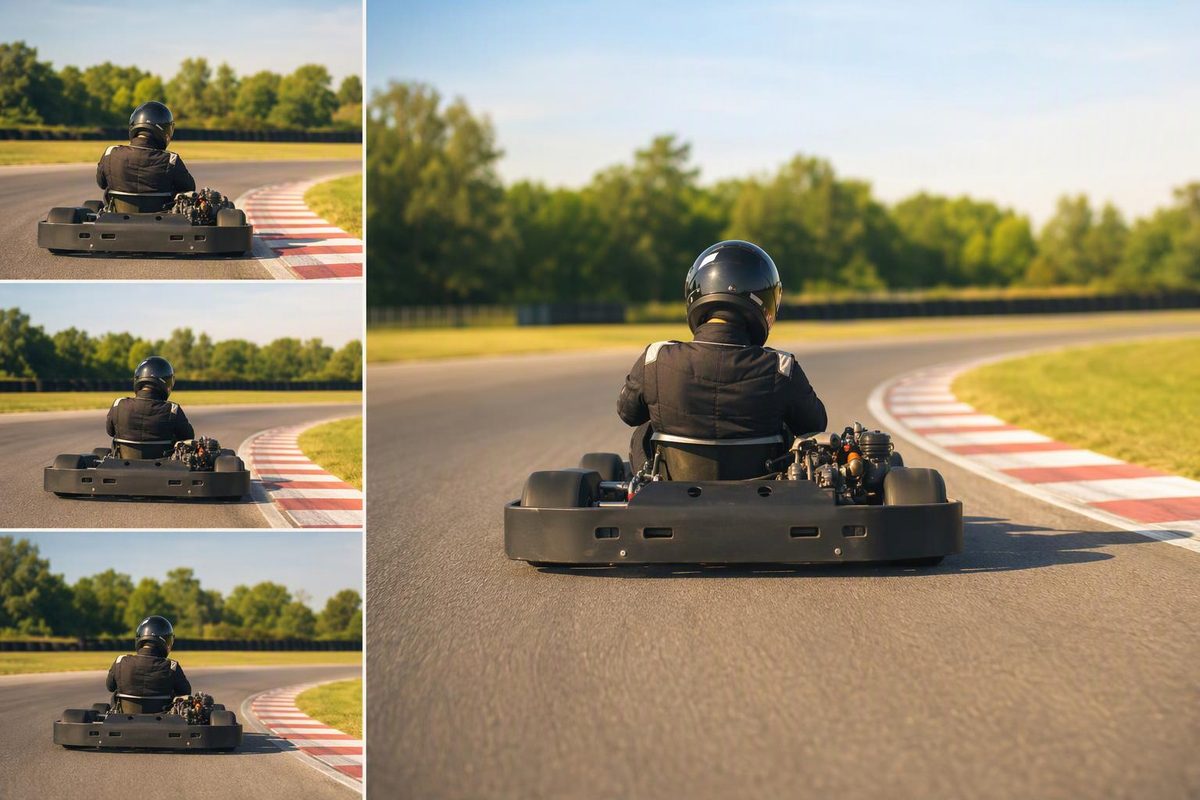
The best starting point for go-kart training drills is to make one corner repeatable before trying to make it faster. Use a vision drill if you notice the exit late, a braking drill if you miss the apex, a steering drill if you keep correcting, or a throttle drill if acceleration sends you wide. Practise one drill per session at a corner you already negotiate comfortably, preferably one leading onto a straight.
These are dry-track baseline exercises, not wet-weather or limit-finding drills.
Choose your recurring cornering mistake; use the suggested drill and checkpoint below.
Choose One Cornering Drill
Use a comfortable corner on a dry track. Keep other inputs unchanged and skip attempts affected by traffic.
Drill 1: Move Your Attention
At your established pace, identify the braking reference, shift attention to the apex as braking begins, then look toward the exit by the apex. Stay aware of traffic and signals.
Checkpoint: Across three clean attempts, notice the exit before a hurried steering correction. If not, repeat without increasing speed.
View All Four Drill Prescriptions
Drill 1: Move Your Attention
At your established pace, identify the braking reference, shift attention to the apex as braking begins, then look toward the exit by the apex. Stay aware of traffic and signals.
Across three clean attempts, notice the exit before a hurried steering correction. If not, repeat without increasing speed.
Drill 2: Repeat Your Braking Point
Use a conservative reference that already works. Come off the throttle, brake with controlled pressure while straight, and release the brake before turning. Keep approach line and throttle use consistent.
Reach the same apex without sliding, running wide or rushing a correction. If outcomes differ, check approach speed and pedal application before moving the reference.
Drill 3: Reduce Extra Steering
Keep your braking reference and apex target. Make a smooth initial input, then unwind as the corner opens. Make any correction needed for control; do not force a single input.
Recall extra corrections after each lap. If repeated added steering accompanies running wide, use a more conservative entry; seek staff or coaching help if it persists.
Drill 4: Clean Up Your Exit
Keep entry and line unchanged. If your normal throttle point repeatedly sends you wide or makes you lift again, try applying throttle slightly later on the next clear attempt as steering unwinds.
Reach the planned exit within track limits without an extra lift or correction. Delaying throttle is a diagnostic exercise, not an after-apex rule for every corner.
Sources: Kart Class vision and steering guidance; K1 Speed beginner braking guidance; Spencer Pigot’s Blayze practice advice. Citations and full instructions appear below.
Establish Your Corner References and Baseline
Attend the circuit’s briefing, wear its required protective equipment and follow its rules and marshal instructions. Rental operator TeamSport, for example, makes its safety briefing mandatory. Ask staff whether your planned practice is appropriate for the session.
These drills should fit normal, predictable driving—not involve deliberately locking the brakes, weaving, stopping or creating unusually large speed differences. Keep both hands on the wheel. When traffic interferes, abandon that attempt and drive normally.
After familiarisation laps, identify three references at your chosen corner:
| Reference | What to Identify |
|---|---|
| Entry | A fixed feature marking where you begin braking |
| Apex | Your target near the inside, not necessarily the corner’s geometric middle |
| Exit | A point within track limits to reach as the steering unwinds |
Use stable features, not another kart or a movable object. Don’t add markers yourself. If you need help choosing the path between them, start with kart racing-line geometry.
Record three clean baseline laps: no traffic interference, flags, contact or obvious mistake. Leave setup alone; this is a driving exercise. For a fuller session structure, use the one-change practice method.
1. Move Your Attention From Entry to Exit
Setup: Keep your established pace and line. Change only what you consciously look for.
Action: Identify the braking reference on approach. As you begin braking, shift your attention toward the apex. By the apex, look toward the exit while remaining aware of traffic and signals. Don’t stare at a marker after it has served its purpose.
This follows Kart Class’s braking-marker, apex and exit vision sequence, which encourages looking ahead rather than discovering each reference at the last moment.
Checkpoint: Across three clean attempts, did you notice the exit before needing to make a hurried steering correction? If not, practise the same sequence again without increasing speed.
2. Repeat a Conservative Braking Point
Setup: Choose a conservative braking reference that already lets you reach the apex comfortably. Keep your approach line and throttle use consistent.
Action: Come off the throttle and begin braking at that reference on each attempt, with controlled pedal pressure. For this beginner drill, slow while the kart is straight and release the brake before turning. Don’t add trail braking—continuing to brake into the turn—as another variable. K1 Speed’s beginner guidance recommends straight-line braking before turn-in.
Checkpoint: Can you reach the same apex without sliding, running wide or making a rushed correction? If the same reference produces different outcomes, first check whether your approach speed or pedal application changed.
Only after the result repeats should you consider a small, deliberate change to the reference, within the circuit’s instructions and available margin. Later braking is not automatically progress. For the next step, see the go-kart braking guide.
3. Reduce Unnecessary Steering Corrections
Setup: Retain your established braking reference and apex target.
Action: Make a smooth initial steering input, then progressively unwind the wheel as the corner opens. Don’t force a “single input” if a correction is needed for control; instead, notice repeated extra inputs that weren’t part of your intended line.
Kart Class’s steering guidance recommends progressive dry-track inputs and avoiding multiple unnecessary corrections.
Checkpoint: After each lap, recall how many extra corrections you made at this corner. If you repeatedly add steering because the kart is running wide, return to a more conservative entry rather than forcing the same speed through it. Seek staff or coaching help if the problem persists.
4. Find an Exit You Can Accelerate From Cleanly
Setup: Keep entry and line unchanged. Notice where you normally begin applying throttle.
Action: If accelerating there repeatedly sends you wide or makes you lift again, try beginning slightly later on the next clear attempt. Aim to accelerate as the steering unwinds, without needing a second lift to stay within the track limits.
Spencer Pigot’s karting practice advice for Blayze includes delaying throttle to learn the corner’s middle phase. Treat that as a diagnostic exercise, not a rule that every corner requires waiting until after the apex.
Checkpoint: Did you reach the planned exit without an extra lift or correction? That is the first test; timing comes next.
Compare Three Clean Laps After the Drill
After a drill, drive three clean laps using the technique normally. Sort their times from quickest to slowest and compare the middle value—the median—and fastest-to-slowest spread with your baseline. The spread is the slowest lap time minus the fastest lap time.
A smaller spread suggests better lap-level repeatability; a quicker median suggests a possible pace benefit. Three laps are a quick checkpoint, not proof. Neither measure isolates this corner—sector timing, if available, is more useful for that.
After the run, note the corner, change tested, number of successful apex/exit attempts out of three, median lap time and time spread. Never try to record notes while driving.
Compare within the same kart and broadly similar conditions where possible. If a rental kart changes between sessions, record that rather than treating the times as a controlled comparison. When moving to an owned kart or club practice, rebuild the baseline instead of carrying over rental braking distances.