
Find the Hairpin Line That Gives You a Clean Exit
Use a slightly late apex for a dry karting hairpin, then compare exit control and repeatable times to see whether a rounder line suits your kart better.
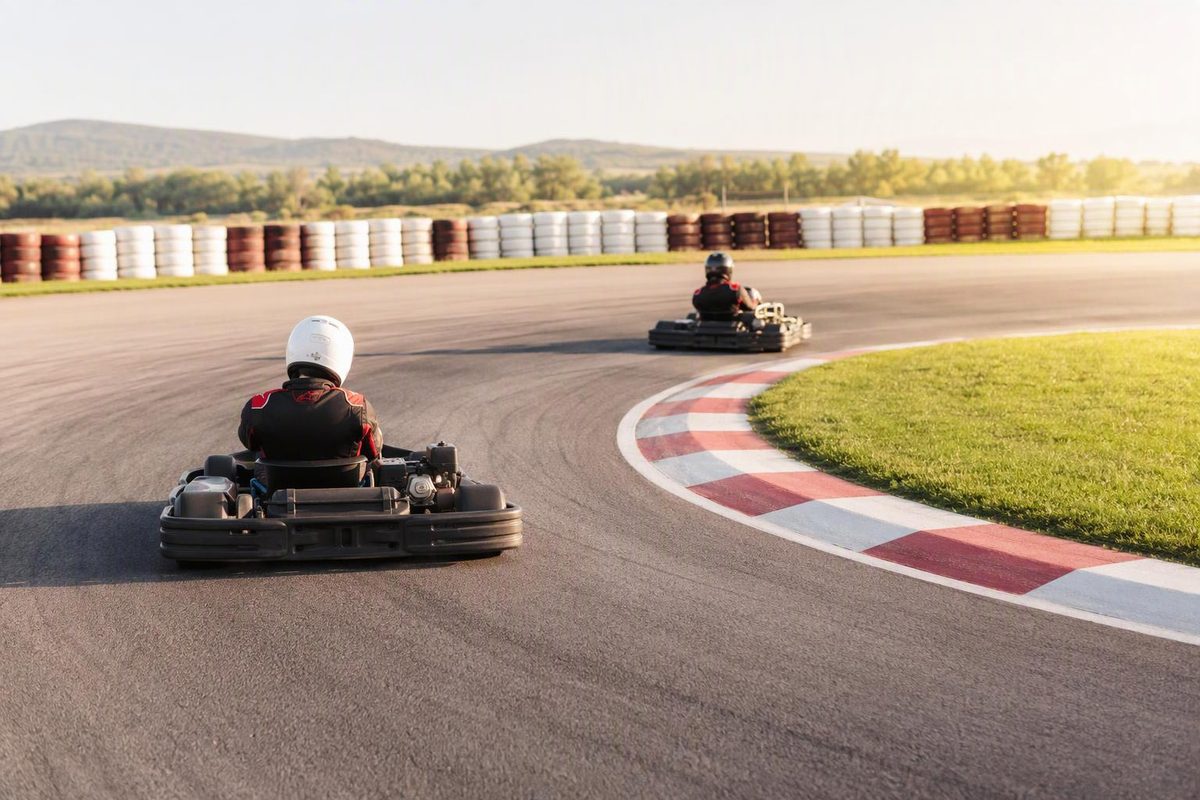
The best racing line to start with for a dry karting hairpin leading onto a straight is a wide approach, controlled braking and a slightly late apex. Turn in slightly later than you would for a middle-apex line, then open the steering as you accelerate out. Keep it only if the whole corner and following straight are faster and repeatable. A late apex is not a reason to stop the kart, pivot sharply and hope the engine recovers.
The apex is the point where your line comes closest to the inside of the corner. A late apex puts that point beyond the corner’s midpoint, towards the exit. Kart Class recommends late apexes for hairpins and corners leading onto long straights, because they can let you accelerate earlier on a more open exit.
Choose what follows the hairpin and what your kart does; use the result to pick your next line test.
Choose Your Next Hairpin Test
Dry-track line practice only. This selects a comparison, not a guaranteed fastest line.
Start With a Slightly Late Apex
Approach wide, brake under control and delay turn-in slightly. Aim to open the steering after the apex without a lift or correction.
Compare three clean laps on your current line, three with the change, then three back on the original. Keep braking consistent and review timing afterwards.
Source: Kart Class apex and rental-kart guidance cited in the article. No track-specific speed or time-gain figures supplied.
A Slightly Late Apex Gives You an Exit to Test
For a right-hand hairpin, the basic path is left side on approach, right side at the apex, then back towards the left on exit. Reverse it for a left-hander. Use only the width permitted by the circuit, leaving clearance from barriers and avoiding prohibited kerbs.
Think of those positions as references, not three points to connect with abrupt steering. The useful line is a continuous path that lets you approach the inside and then begin releasing steering towards the exit. Touching the intended apex does not make the line successful if you still cannot finish the turn cleanly.
The straight after the hairpin is part of the decision. You are trading some entry freedom for an exit that may let you accelerate sooner without tightening the steering again. That trade is worth testing, but it is not automatically worthwhile in every kart or corner layout.
A visible late apex can also hide an unhelpful entry. If you slow excessively, turn sharply and then wait for the kart to recover, the line may look correct from trackside while giving away time. Judge the path by the kart’s response and the measured result, not by where it looks closest to the inside.
Brake at a Repeatable Reference Before Changing Turn-In
Choose a visible reference beside the track—a board, painted mark or other fixed feature. Start with a conservative braking point and reduce speed while the kart is straight. The reference should let you recognise where braking begins without searching for it at the last moment.
For this first line exercise, finish braking before turning. Keep trail braking—continuing to brake into the turn—as a separate skill. Changing your braking technique and line together makes the result harder to diagnose. Follow the venue’s briefing, flags and equipment requirements, and test only when you have clear space.
A repeatable braking reference does not require you to persist with an entry that is clearly too fast. If you cannot reach the intended apex without an uncontrolled slide, running wide or excessive correction, abandon the comparison and establish a controlled approach first. A clean test needs a line you can actually reproduce.
Do not move your braking point later simply because you are delaying turn-in. Braking and turning are separate references. Moving both at once leaves you unable to tell whether a different exit came from the line, the entry speed or the braking change.
Once you have a controlled baseline, keep the braking reference and technique consistent while testing a modest turn-in change. If the new path proves unsuitable at that entry speed, that is useful information. It is not an instruction to keep forcing the kart towards the inside.
Delay Turn-In Slightly, Not as Far as Possible
Look towards your intended apex rather than staring at the inside barrier. Stay outside a little longer, then make a controlled steering input to bring the kart towards it. You should still have a clear path to the apex and enough track available to finish the corner.
“Later” does not mean “as late as possible.” A later apex asks for a tighter entry arc, which can cost minimum speed. Driver61’s car-driving racing-line explanation describes this trade-off: a sharper entry opens the exit, but turning too late sacrifices corner speed. That explains the general geometry; it does not establish the fastest turn-in point for your kart.
Make the change small enough that you can recognise what changed. If your previous line reached the inside around the middle of the hairpin, the first comparison is a slightly later approach to the inside—not a completely different braking point followed by a sudden pivot.
Your outside approach position also needs to stay consistent. A later turn-in from a narrower approach is not the same test as a later turn-in from your original wide approach. Use trackside references to distinguish the starting position from the moment you steer.
If the corner tightens or its exit is difficult to see, do not assume the visible midpoint is the right place to aim. Choose an apex that leaves a usable exit within the circuit’s limits. There is no universal distance past the midpoint in the supplied guidance, and no fixed turn-in measurement that applies to every hairpin.
The Apex Works Only if You Can Release Steering
Aim to pass close to the inside beyond the corner’s midpoint, without touching a barrier or relying on a kerb strike. Clearance matters more than making the line look as tight as possible.
The checkpoint is what happens next: can you begin opening the steering, or must you add more lock to finish the corner? If you keep tightening the turn after the apex, the exit is not yet open. Reaching the inside has not completed the useful part of the line.
Review your entry speed and turn-in point, but do not treat the correction alone as proof of which one is wrong. The same visible problem can leave you with more than one thing to investigate. Change one variable on the next clear lap, not both.
Also distinguish a deliberate choice from a rescue. Holding a tighter exit to prepare for another corner may be part of the plan. Adding steering because the kart is heading somewhere you did not intend is a correction. Those should not be recorded as the same outcome when comparing lines.
You do not need to force the kart all the way to the outside edge to demonstrate a good exit. Let it use the available width as steering opens, while staying within the permitted track. The intended exit should remain available rather than becoming something you reach only after a lift or abrupt steering adjustment.
Add Throttle Without Running Out of Exit
Feed in throttle as grip allows and let the kart move towards your planned exit. Do not force it outward or accelerate into a path that runs out of track. The objective is an acceleration phase you can continue, not an early throttle application that you immediately have to undo.
An exit that needs a lift or steering correction is a useful warning, even if the entry felt fast. Record that outcome when you review the run. Otherwise, it is easy to remember the satisfying approach and overlook the time or control lost afterwards.
Earlier throttle alone is not proof of a faster hairpin. A line can allow an earlier pedal input after excessive slowing, yet still leave the kart recovering along the straight. Compare the complete corner and its run-out rather than treating the first throttle application as the finish line.
The draft’s sources do not supply a universal target apex speed, throttle percentage or steering angle. Use observable checkpoints instead: controlled entry, a reachable apex, steering that opens towards the planned exit and acceleration that does not require a rescue.
A Rounder Line May Preserve More Speed in a Rental Kart
A rental kart may struggle to recover from excessive slowing. Kart Class specifically warns against locking the wheels and losing too much speed in rentals. If your late-apex line produces a near-stop and a sluggish exit, compare it with a smoother arc and an apex closer to the midpoint.
That comparison is not a licence to carry an entry speed you cannot control. A rounder path is worth testing because the exaggerated late-apex version may be costing too much speed, not because braking can be ignored.
Keep the modest late apex as a test, not a rule to exaggerate. If a small delay in turn-in opens the exit without making the kart feel stalled, you have a useful candidate. If delaying further only produces a sharper pivot and slower recovery, the more extreme line has not earned its place.
Separate excessive slowing from an exit-position problem. A kart that nearly stops but exits with steering opening needs a different comparison from one that carries speed but still needs more steering after the apex. The first suggests testing a rounder line; the second calls for reviewing how you reached the apex and whether the entry was controlled.
Neither diagnosis establishes a guaranteed winner. Keep the line that produces the better repeatable measured result, not the one that feels most dramatic.
The Following Corner Can Change the Best Exit
If another corner arrives immediately, using the full outside exit may leave you badly positioned. Kart Class stresses choosing an apex that prepares the kart for the following corners. Measure the sequence, rather than making the hairpin alone look tidy. For the broader principle, see Kart Racing Lines, Explained.
Choose the position you need for that next corner before deciding how much exit width to use. Then work backwards: can your hairpin apex and steering release deliver the kart there without a hurried repositioning move?
A line that improves the hairpin but compromises the next turn may lose over the sequence. Equally, keeping the kart unnecessarily tight on exit can sacrifice acceleration when there is no positioning benefit. The track layout, not the label “hairpin,” determines which compromise is worth testing.
The recommendation here is a dry-track baseline. The supplied sources do not establish the best wet-weather line for your venue, so do not treat the selector or the late-apex recommendation as a wet-line prescription.
Compare Three Clean Runs Without Mixing Changes
In the same kart and reasonably stable conditions, use this comparison:
- Drive three clean laps with your current line, using repeatable braking, apex and exit references.
- Keep the braking reference and technique consistent and try a slightly later turn-in for three clean laps.
- Return to the original line for another three laps to check whether general improvement explains the difference.
Review timing afterwards—never operate a timer while driving. Prefer a sector covering the hairpin and following straight; otherwise use comparable clean lap times. Exclude traffic-affected laps. If the hairpin leads directly into another corner, the measurement needs to cover that sequence to answer the actual line-choice question.
Alongside the times, record whether each run had a clean exit, extra steering after the apex, a lift or excessive slowing. These observations help explain a result; they do not replace it. A faster lap elsewhere on the circuit does not prove that the hairpin change helped.
Returning to the original line gives the comparison a check against simply becoming more familiar with the kart or track. If the original line also improves on the final run, avoid attributing all the earlier difference to the later apex.
Keep the change only if it is repeatable and improves the measured result without forcing corrections. If the runs are inconsistent or the timing cannot isolate the relevant section, the evidence does not yet identify a winner. Retain the controlled baseline and repeat the comparison when you can obtain clean runs.