
Find Out Why Your Kart Pushes Wide or Hops
Separate karting grip from binding and hopping. Test progressive steering over three clean laps, compare corner phases, and know when to involve staff.
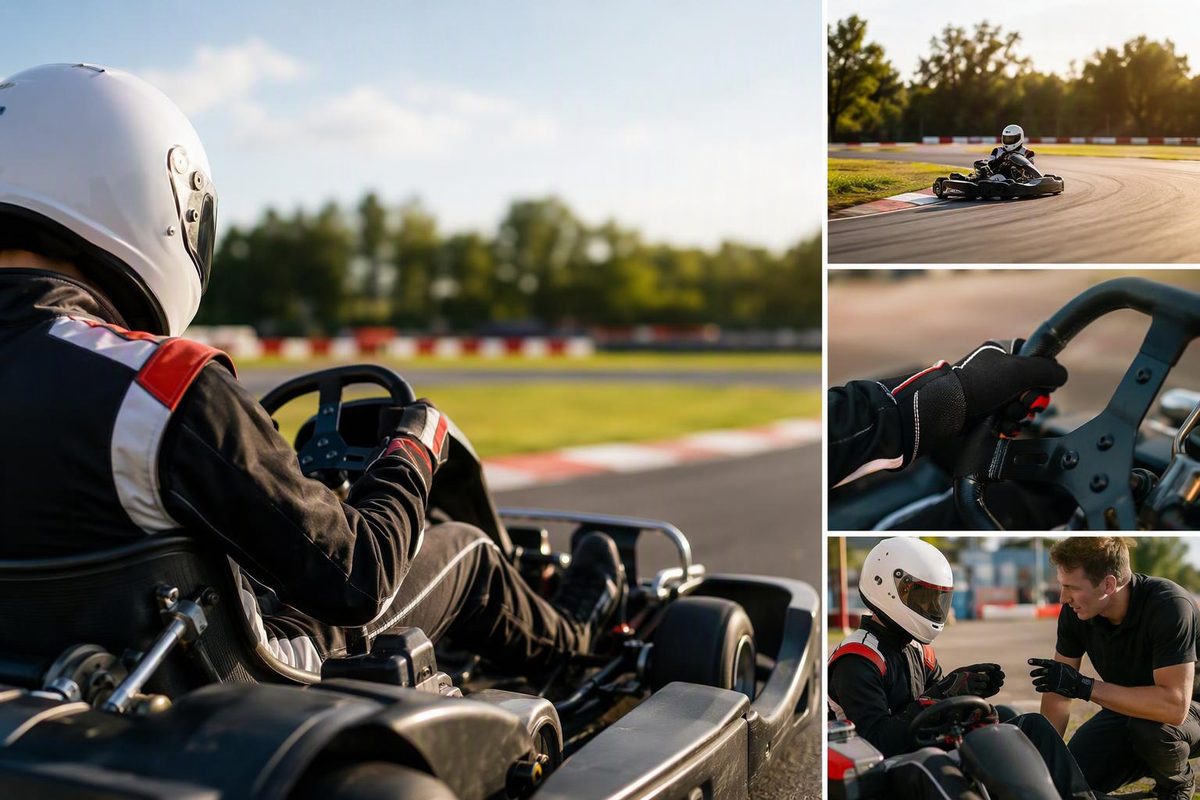
Grip is the traction between the tyres and the track; overgrip, as used here, means binding or hopping in high-grip conditions. More grip helps only if the kart can still turn freely. If a safe-to-drive kart feels planted but pushes wide or hops, first test a more progressive steering input. Persistent symptoms need further investigation, not an automatic setup change.
Overgrip is not oversteer, where the rear slides outward, and it is not a precise diagnosis. A wide exit or a bounce alone cannot establish that the kart has too much grip. The useful distinction is whether the kart responds to a controlled driving change or continues to resist the turn.
Choose your kart, control status and steering-test result to find the next step.
Choose Your Next Step
Compare Progressive Steering
In dry practice, compare three clean baseline laps with three clean laps using progressive steering. Keep the same kart, references, braking and throttle plan.
Record where push or hopping begins, any second steering input, and whether the wheel unwinds on exit. Report persistent abnormal handling to rental staff.
This selects a next step, not a diagnosis of overgrip.
Source: the article’s steering drill, rental safety guidance and chassis-specific cautions; technical references are Unger, Kart Class and the OTK setup guide.
Rear Grip Can Prevent the Kart From Turning Freely
A conventional racing kart has a solid rear axle: both rear wheels turn together, although the outside wheel must travel farther through a corner. The kart therefore needs to unload its inside rear tyre to turn freely.
If that tyre stays heavily loaded, the rear can resist the turn and overpower the fronts, producing understeer—the kart running wider than you intended. Mike Unger’s technical explanation describes this connection between rear grip, inside-rear unloading and understeer.
That explains why “planted” and “easy to turn” are not interchangeable. A kart can feel secure against sliding while still resisting the direction you are asking it to take. Adding more steering is then a response to the symptom, not proof that the front tyres simply need more grip.
Hopping can also involve the chassis or axle flexing and springing back under load. The OTK chassis setup guide, for example, explains how excessive axle flex in high-grip conditions can drop the inside rear tyre back onto the asphalt and bind the kart.
These mechanisms explain possible behaviour; they do not identify the cause in your kart from a description alone. In particular, the OTK explanation is not a universal axle prescription for every chassis. Treat “overgrip” as a way to describe the complaint while you gather better observations.
Locate the First Push or Hop, Not Just the Wide Exit
Record where the problem starts. The exit is where a poor corner often becomes obvious, but it may not be where the difficulty began. Separate the first unwanted response from the corrections you made afterwards.
| Corner Phase | Record This | Compare During the Test |
|---|---|---|
| Entry | Immediate push or push after a sharp input | Same turn-in reference |
| Apex | Initial turn followed by hopping or resistance | Same intended apex |
| Exit | More steering needed as you accelerate | Whether the wheel unwinds |
On entry, distinguish a kart that runs wide as soon as you ask it to turn from one that reacts badly after you snap the wheel across. Those are different observations, even if both finish with a missed apex. Record the sequence rather than assigning both the same label.
At the apex, note whether the kart turned initially and then began hopping or feeling held back. That gives a coach or mechanic something more specific than “it would not turn.” Also note whether you responded with a second steering input; otherwise, your notes may blur the original behaviour with your attempt to correct it.
On exit, check whether the wheel is beginning to straighten where you intended. If you are still adding steering when you want to accelerate away, the corner is not resolved merely because the hopping has stopped. Your comparison needs to include where the kart goes, not just how calm it feels.
Do not try to write these observations while driving. Remember the sequence and make the notes once safely back in the pits. If you cannot confidently identify the phase, record that uncertainty rather than choosing a diagnosis to fit it.
Progressive Steering Is a Controlled Test, Not a Cure-All
Smooth steering does not mean turning so slowly that you miss the corner. It means building the required steering angle deliberately rather than snapping the wheel across and correcting it repeatedly.
Kart Class’s steering guidance recommends progressive steering in high-grip conditions and explains how repeated corrections disturb the kart’s balance. Unger likewise identifies abrupt steering, braking and throttle inputs as contributors to hopping and binding.
The test is useful because it changes something you can control without immediately changing equipment. It does not require you to decide whether the axle, chassis or tyres are responsible before driving another lap.
Keep the question narrow: with the same corner references and a deliberate steering build-up, does the kart reach the apex and release onto the exit with fewer corrections? Do not turn that into a simultaneous test of later braking, a different line and earlier throttle. If several inputs change, an improvement will not tell you which change helped.
A deliberate input can still be decisive. The aim is not to avoid the steering angle the corner needs; it is to avoid a sudden application followed by repeated attempts to repair the kart’s response.
Compare Three Baseline Laps With Three Test Laps
Run this drill during a dry practice session, following the circuit’s rules and wearing its required safety equipment. Only continue while the kart is safe to control. Suspected faults or handling that compromises control take priority over completing the comparison.
Choose One Corner and Fix Your References
Choose a simple corner rather than an overtaking zone or a sequence where changing one corner compromises the next. Use a pace at which you can make deliberate inputs safely. The aim is a readable comparison, not a fastest-lap attempt.
Fix your braking point, turn-in point and intended apex. Choose an exit reference where you can check whether the wheel is beginning to straighten. If those references are unclear, start with kart racing-line geometry.
An intended apex matters because a smoother-feeling lap is not necessarily a better corner. If the kart only stops hopping because you no longer reach the intended line, the result needs more work. Likewise, a calm entry that leaves you running beyond the permitted track boundary on exit is not a successful test.
Record Three Clean Baseline Laps
Use the same kart and record three clean baseline laps. Note where the push or hop begins, whether you make a second steering input, and the lap times. Exclude laps affected by traffic, and write the notes in the pits.
Keep your descriptions consistent. “Hop at the apex, then another steering input” is easier to compare than alternating between “too much grip” and “no front grip.” The first describes what happened; the others already assume a cause.
If traffic prevents a clean comparison, do not count the interrupted lap as evidence for or against the steering change. A compromised approach or exit means you are no longer comparing the same task.
Change Only the Steering Build-Up
For three clean test laps, apply the steering progressively, then unwind it as the exit opens. Keep your braking, line and throttle plan as consistent as possible. Do not deliberately provoke a slide to make the kart feel freer.
Watch for a second steering input, but do not suppress a necessary correction simply to improve your notes. Stay within the permitted track boundary and maintain control. Record that a correction was necessary; that is part of the result.
If you still need a sudden steering input to make the corner, reduce your entry pace and establish a new baseline. That is a separate test. Combining a slower entry with a new steering build-up would make it harder to tell which change improved the response.
Judge the Result by Line, Corrections and Repeatability
Compare the baseline and test laps at the same checkpoints. Did you reach the intended apex with fewer corrections? Did the hopping diminish? Could you straighten the wheel without running beyond the permitted track boundary?
Use lap times as a second check, not a verdict from one unusually quick lap. A calmer corner is promising, but it must preserve your exit and become repeatable. The one-change practice method helps you test that.
| Test Result | What It Supports | Next Step |
|---|---|---|
| Less hopping; line preserved | Steering change helped | Check repeatability |
| Calmer but misses the line | Test has not succeeded | Recheck references |
| No clear improvement | Cause remains unresolved | Keep phase notes |
| Control compromised | Further testing is unsafe | Stop the drill |
If progressive steering helps, keep the conclusion proportional: this driving change improved this corner in these conditions. It does not prove that the kart’s setup was correct, nor does it prove that high grip was the sole cause of the original symptom.
If it does not help, do not jump directly to “the axle is wrong.” The test has shown that this steering change did not clearly resolve the complaint. Your corner-phase notes remain useful evidence for the next conversation with staff, a coach or a mechanic.
The draft sources do not supply a lap-time threshold, steering rate or percentage improvement that establishes overgrip. There is no supported numerical pass mark here. Judge the comparison by the intended line, control, corrections and repeatability rather than inventing one.
Rental Karts Need Staff Assessment, Not Setup Changes
In a rental kart, report persistent hopping or abnormal handling to staff rather than modifying the kart. Explain where it starts, what happens next and whether progressive steering changed it. “Turns initially, then hops at the apex” gives staff a clearer complaint than “too much grip.”
Stop the drill if the behaviour compromises control; do not keep testing a kart you suspect has a fault. You do not need to complete the baseline or test laps before reporting unsafe behaviour.
Keep the report factual. A rental driver can describe the handling and the attempted driving change, but the word overgrip does not establish an equipment fault or identify a component that should be changed.
Own-Kart Setup Needs a Chassis-Specific Baseline
With your own kart, take the corner-phase notes to your mechanic and start from the chassis manufacturer’s baseline. Keep the driving comparison separate from any subsequent equipment test so that the result remains interpretable.
The OTK guide explicitly warns that setup effects vary with track layout, surface, weather and grip conditions. Its explanation can help frame an investigation on the relevant equipment; it does not establish the right adjustment for another chassis or every high-grip track.
Do not copy axle, tyre-pressure or fastener changes simply because someone calls the problem overgrip. No universal setting follows from that label. First establish whether a controlled driving input improves the corner, then investigate any remaining equipment issue separately.
The useful outcome is a specific report: where the kart begins resisting the turn, whether it hops, which corrections follow, and whether progressive steering preserves the apex and exit. That is a better starting point for setup work than chasing more or less grip without identifying what the kart actually does.