
A Practical Guide to Choosing the Right Fade Haircut
It blends longer hair above into shorter sides and back, with low, mid, high, skin, drop and burst types distinguished from a taper.
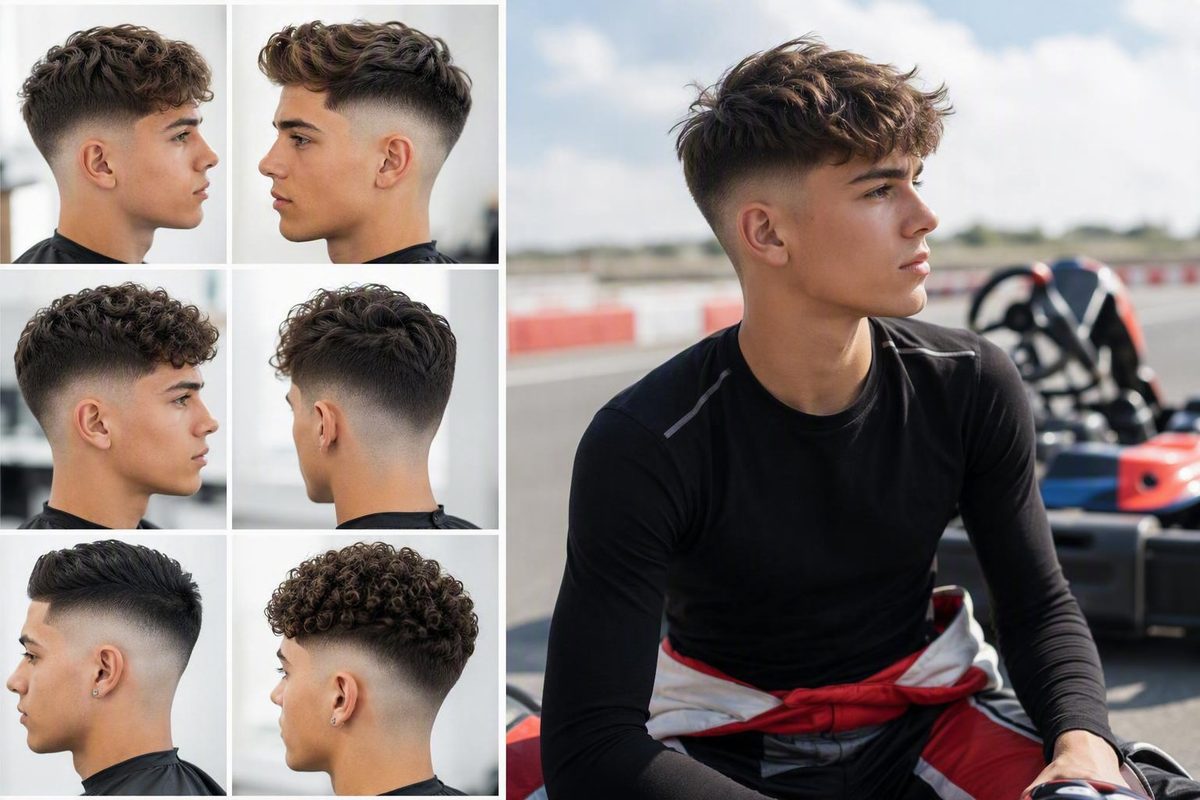
What a fade haircut is
A fade is a haircutting technique that gradually blends longer hair above into shorter hair below, usually along the sides and back of the head. Instead of leaving a visible step between two lengths, the barber creates a smooth transition through progressively shorter sections.
The blend is the defining feature. A fade does not determine what must happen on top: the longer hair may be cropped, textured, combed or swept back. It is best understood as one part of an overall haircut rather than a complete hairstyle by itself. Barber Industries similarly describes a skin fade as a cutting technique incorporated into a wider hairstyle.
A fade also does not have to expose bare skin. The barber can leave a short, visible clipper length at the bottom and blend upward from there. When the shortest section reaches bare or nearly bare skin, it is commonly called a skin fade or bald fade. Fade Barber Shop likewise notes that not every fade is a skin fade.
That gives “fade” a broader meaning than many first-time clients assume. It describes a gradual reduction in length, not one compulsory height, one degree of contrast or one particular style on top.
The word also has meanings outside barbering. In motorsport, for example, “brake fade” refers to deteriorating braking effectiveness. That is a separate topic; this guide focuses on the haircut meaning.
A simple working definition is:
A fade is a smooth transition from longer hair above to progressively shorter hair below, normally across the sides and back.
Once that principle is clear, the different fade names become much easier to understand.
The three decisions that define a fade
Fade terminology can make a consultation sound more complicated than it needs to be. Names such as low fade, high skin fade, drop fade and burst fade do not all describe the same feature.
A practical way to choose a fade is to separate it into three decisions:
- Where does the blend begin?
- How short does it become at the bottom?
- What path does the blend follow around the head?
These variables can be combined. They are not competing categories.
1. Blend height
Height describes the general vertical placement of the transition:
- Low: The transition stays relatively close to the ears and lower hairline.
- Mid: The main transition sits around the middle or temple region.
- High: Closely cut hair extends farther up the sides before meeting the longer section.
These are general placement ranges, not standardized measurements. Different barbers may place the same named fade slightly differently.
Use “low,” “mid” or “high” to establish a direction, then confirm the placement visually. Pointing to the intended area or showing a photograph is more reliable than assuming everyone uses the label identically.
2. Shortest finishing length
The second decision is how short the bottom of the fade should be.
A barber can leave visible hair at the base, creating a fade without exposing the scalp. Alternatively, the blend can reach bare or nearly bare skin. That second finish is commonly called a skin or bald fade.
Height and finishing length are independent. For example:
- A low skin fade starts low and reaches skin at the bottom.
- A high skin fade starts high and also reaches skin.
- A mid non-skin fade sits at a medium height but leaves visible hair at the base.
- A low fade with a longer bottom length keeps both the placement and finish comparatively restrained.
The word “skin” answers “How short?” It does not answer “How high?”
If you do not know clipper-guard terminology, use plain language. Tell the barber whether you want visible hair, very short stubble or bare skin at the bottom.
3. Blend shape
The third decision is the route the transition follows around the head.
A conventional fade may remain at a broadly consistent height as it moves from the sides toward the back. Shape terms change that route:
- A drop fade descends behind the ears and follows the shape of the head.
- A burst fade creates a curved blend around the ear rather than continuing evenly across the entire nape.
“Drop” and “burst” therefore describe shape, not the shortest length.
How fade labels overlap
Once the three variables are separated, combined names become logical:
- Low skin fade: low placement with a skin-level finish.
- High skin fade: high placement with a skin-level finish.
- Mid drop fade: middle placement with the blend descending behind the ears.
- Low non-skin drop fade: low placement, a curved path and visible hair at the bottom.
- Burst skin fade: curved blending around the ear with a skin-level finish.
Not every barber will use every combination as a formal service name. The point is not to create the longest possible label; it is to communicate the intended result.
Treat haircut names as shorthand rather than exact specifications. Terminology can vary among barbers, shops and regions, so concrete details and photographs are more dependable than a label alone.
Low, mid and high fades compared
Low, mid and high describe the general vertical placement of the blend. As the fade moves higher, more of the sides is usually cut closely, increasing the contrast between the sides and the longer hair above.
These descriptions are general ranges rather than fixed fractions of the head.
| Fade type | General placement | Amount of short hair or scalp exposure | Overall contrast |
|---|---|---|---|
| Low fade | Begins relatively close to the ears and lower hairline | Preserves more length across the sides; scalp exposure depends on the bottom finish | Usually the softest of the three placements |
| Mid fade | Places the main transition around the middle or temple region | Creates a broader closely cut area than a low fade; may or may not expose skin | Balanced to moderately strong |
| High fade | Begins farther up the sides, closer to the longer hair on top | Leaves a large area of closely cut hair; scalp exposure still depends on the bottom finish | Usually the strongest contrast |
Low fade
A low fade keeps the transition near the lower part of the sides and back. Because the blend begins relatively close to the ears and lower hairline, more length remains across the upper sides.
This usually makes the fade less visually dominant within the complete haircut. The lower edges are shortened and blended while the upper sides remain more connected to the top.
“Low” does not mean “long.” A low fade can still reach bare skin; the skin-level or extremely short section simply remains lower on the head.
A low fade may suit your stated preference if you want:
- More visible hair through the sides
- A smaller closely cut area
- The transition kept near the lower edges
- Less contrast than a mid or high placement usually creates
These are descriptions of the cut, not rules about who should wear it.
Mid fade
A mid fade places the main transition around the middle or temple region. It sits between the contained placement of a low fade and the larger closely cut area created by a high fade.
Because “mid” is not an exact point, it is worth confirming the placement with your barber. A reference image can show whether you want the transition closer to the temples or slightly lower.
A mid fade can create clear separation between the top and sides without extending the closely cut area as high as a high fade. It can also finish at different bottom lengths, from visible short hair to bare skin.
High fade
A high fade begins farther up the sides, leaving a larger area of closely cut hair beneath the transition. It generally creates stronger contrast between the sides and the longer section above.
“High” should not be treated as one compulsory landmark. Its precise placement still needs to be agreed upon during the consultation.
A high fade is not automatically a skin fade. It can start high while retaining visible hair at the bottom. Conversely, a low fade can expose skin even though its transition sits much lower.
The Rosemont Barbers’ comparison also uses low, mid and high for general fade placement while identifying skin or bald fades by their shortest point.
Height controls placement, not the whole haircut
Choosing between low, mid and high answers only one part of the consultation. It does not specify:
- Whether the bottom reaches skin
- Whether the blend drops behind the ears
- How the neckline is finished
- How the sides connect to the top
- How much length remains on top
If you ask only for a “mid fade,” the barber still has several decisions to make. Pair the height with a bottom length and, where relevant, a blend shape.
Skin, drop and burst fades explained
Skin, drop and burst are commonly added to fade names, but they describe different attributes. “Skin” refers to the shortest finish. “Drop” and “burst” refer primarily to the path of the blend.
Skin fade or bald fade
A skin fade—also called a bald fade—reaches bare or nearly bare skin at its shortest point. From there, the barber blends upward through progressively longer lengths until the fade meets the rest of the haircut.
This differs from a fade that leaves a visible clipper length at the bottom. Both can have a smooth transition; the skin fade simply takes the shortest section closer to the scalp.
A skin finish can be combined with any general height:
- Low skin fade: The skin-level section remains comparatively low.
- Mid skin fade: The transition is placed around the middle region.
- High skin fade: The closely cut or bare area extends farther up the sides.
As new hair becomes visible in the skin-level section, the original contrast softens. If you do not want exposed scalp, say so directly: “I want a fade, but not to skin.”
Drop fade
A drop fade is defined by its descending shape. Instead of remaining at roughly the same height toward the back, the transition drops lower behind the ears and follows the shape of the head. StyleSeat describes it as a fade that descends around the ears and follows the head’s shape.
“Drop” does not specify the shortest length. You can request:
- A drop fade that reaches skin
- A drop fade that leaves visible hair at the bottom
- A low drop fade
- A higher drop fade with a pronounced descent behind the ears
A rear-view reference image is helpful because the defining shape may not be visible in a front-facing photograph.
Burst fade
A burst fade creates a curved or semicircular blend around the ear. Rather than carrying the same fade evenly across the entire back, the short area curves around the ear and ends toward the side of the neck.
As with a drop fade, “burst” does not tell the barber whether the bottom should reach skin. The desired finishing length must be stated separately.
A simple way to remember the terms
Think of the names as answers to different questions:
- Low, mid or high: Where is the transition placed?
- Skin or non-skin: How short does the bottom become?
- Drop or burst: What path does the blend follow?
Other terms—including undercut, temple fade, faux-hawk fade and taper fade—may appear on service menus. They do not need to be forced into one universal taxonomy. Some describe the larger hairstyle, some describe a localized area and some vary in meaning between shops.
The goal is not to memorize every possible name. It is to understand what each word is intended to communicate.
Fade versus taper: the practical difference
A taper and a fade both transition from longer hair to shorter hair, which explains why the terms are often confused.
The broad practical distinction concerns coverage and intensity:
- A taper is usually subtler and concentrated near the edges, particularly the sideburns and neckline.
- A fade generally extends across more of the sides and back, creating a broader transition and often stronger contrast.
With a taper, much of the side length may remain intact while the barber shortens the hair near its natural boundaries. With a fade, the shortening normally occupies a larger section.
This is a useful distinction, but it is not a universal naming standard. Some barbers classify a taper as a fade variation, while others treat tapers and fades as separate services. StyleSeat, for example, describes a taper as more gradual and less dramatic than a fade.
When to ask for a taper
Ask for a taper when you want most of the side length preserved and the shortening kept mainly near the sideburns and neckline.
You might say:
“I want to keep most of the length on the sides, with a gradual taper at the sideburns and neckline.”
A taper is the clearer request when you want:
- Most of the side length retained
- Cleanup concentrated around the edges
- Less contrast between the upper and lower sides
- Shortening restricted mainly to the perimeter
When to ask for a fade
Ask for a fade when you want a broader blended area across the sides and back. Include its height and shortest length:
“I want a low fade, but leave visible hair at the bottom rather than taking it to skin.”
Or:
“I want a high fade taken to bare skin, with clear contrast between the top and sides.”
These descriptions are more useful than asking for something merely “clean” or “sharp,” because those words do not identify placement or length.
What “taper fade” means
“Taper fade” does not have one meaning that can safely be assumed everywhere. Depending on the barber or shop, it might refer to:
- A taper around the sideburns and neckline
- A restrained, very low fade
- A fade with tapered edges
- A general request for blended short sides
If a shop lists “taper fade” as a service, ask which areas it includes and how far the blend extends. A reference photograph helps the barber identify the intended coverage without depending on disputed terminology.
How to ask your barber for the fade you want
You do not need expert barbering vocabulary to request a fade. You need to communicate the visible result clearly.
Use this checklist before the cut begins.
1. Choose the fade height
Tell the barber whether you want the transition low, mid or high. Then point to the intended area or use a photograph to confirm the placement.
Useful questions include:
- “Is this what you consider a low fade?”
- “Where would your mid fade begin?”
- “Can we keep the blend below this point?”
This is especially useful when visiting a barber whose terminology may differ from what you have heard elsewhere.
2. Specify the shortest bottom length
State whether the bottom should retain visible hair or reach bare skin.
If you know your preferred clipper length, mention it. If not, use plain language:
- “Leave visible hair at the bottom.”
- “Take it very short, but not to bare skin.”
- “Take the bottom all the way to skin.”
- “I do not want my scalp exposed.”
Do not assume that the word “fade” communicates the bottom length automatically.
3. Describe the blend shape
Say whether you want the blend to remain relatively even, descend behind the ears or curve around them.
For a drop fade, you might say:
“I want a low drop fade with visible hair at the bottom. Please let the blend descend behind the ears.”
For a burst fade:
“I want the blend curved around the ear rather than carried evenly across the entire nape.”
Side and rear photographs are particularly helpful for these requests.
4. Explain what you want on top
The fade is only part of the haircut. Tell the barber:
- How much length you want removed
- Whether you want the top cut with scissors or clippers
- How you intend to style it
- Whether you want the top connected smoothly to the sides or kept more separate
- Where you normally wear your part or fringe
A photograph can show the intended proportions, but identify the specific features you want rather than asking for an exact copy without discussion.
5. Confirm the neckline
Discuss how the back should finish. Depending on the shop’s terminology, the options may include a natural, tapered, rounded or blocked neckline.
The key question is whether the neckline should blend into the haircut or retain a more defined outline.
6. Discuss facial-hair connections
If you have sideburns or a beard, explain whether the haircut should:
- Blend continuously into the facial hair
- End with a defined separation at the sideburn
- Include a gradual beard fade
- Leave the facial hair untouched
If beard length matters, state how much may be removed instead of relying only on “blend it in.”
Sample requests
These requests combine the main variables without overloading the consultation:
“I want a low fade that leaves a short clipper length at the bottom. Keep more length through the upper sides and trim the top with scissors.”
“I want a high skin fade with the blend taken to bare skin. Keep the top longer.”
“I want a mid drop fade. Let the blend descend behind the ears, but do not take the bottom completely to skin.”
“I want the shortening kept around the sideburns and neckline instead of extending high across the sides. Would you call that a taper or a taper fade here?”
Each version explains the desired result instead of depending entirely on a haircut name.
Bring useful reference images
When possible, bring clear photographs showing the desired haircut from the:
- Front
- Side
- Back
One side-view image may communicate height but fail to show the neckline or the path behind the ear. A front image may show the top while revealing little about the fade.
Use the photographs to identify specific details: placement, bottom length, blend shape and the proportions of the top. The evidence-based practical recommendation is straightforward: reference images help clarify what a client means, especially when terminology varies.
Prefer concrete details to subjective adjectives
Words such as “subtle,” “bold,” “tight,” “clean” and “short” can support the conversation, but they should not carry the whole request.
“Short on the sides,” for example, could mean:
- Shortened with scissors
- Cut with a clipper guard
- Faded to a very short visible length
- Faded all the way to skin
- Shortened only around the perimeter
Replace subjective language with observable details:
- Where the transition should begin
- Whether skin should show
- How the blend should travel around the ears
- How much length should remain on top
- Whether the top and sides should look connected
A photograph paired with those details is more dependable than a haircut name alone.
How fades grow out and when to refresh one
A fade depends on short lengths and a controlled transition. As the hair grows, the shortest sections become more visible and the contrast between different lengths gradually softens.
The haircut does not suddenly stop being a fade. Its edges and transition simply become less distinct.
Two barbershop sources offer similar practitioner recommendations for maintaining the freshly cut appearance:
- The Rosemont Barbers suggests fade touch-ups approximately every two to three weeks.
- Barber Industries recommends a similar two-to-three-week interval for skin fades.
These are recommendations from two barbershop sources, not a mandatory or industry-wide schedule.
Your practical interval will depend on:
- How quickly the shortest area becomes visibly longer
- Whether the fade begins at skin or leaves visible hair
- How high the closely cut area extends
- How sharp you want the transition to remain
- Your budget and preferred appointment routine
It is also useful to separate maintenance of the faded sides from work on the top. You may want a fade refresh with little removed above, or you may want the top reshaped while allowing the sides to grow longer.
At an appointment, you can ask for:
- A fade refresh with minimal work on top
- A cleanup around the edges
- A complete haircut that resets both the fade and top
- A softer transition as the haircut grows longer
There is no universal rule that every fade must be recut after a fixed number of days or weeks. Use the point at which the blend no longer looks the way you want as your practical guide.
Frequently asked questions
Does every fade go down to the skin?
No. A fade can leave a short, visible clipper length at the bottom and still create a smooth transition into longer hair above.
A fade whose shortest section reaches bare or nearly bare skin is commonly called a skin fade or bald fade. If you want visible hair left at the base, ask for a non-skin finish.
Can a fade be both low and a skin fade?
Yes. “Low” describes where the transition is placed, while “skin” describes the shortest finishing length.
A low skin fade keeps the transition relatively close to the ears and lower hairline while taking the bottom to bare or nearly bare skin. A high skin fade uses the same bottom finish but places the transition farther up the sides.
Is a taper fade the same thing as a fade?
Not necessarily. The meaning of “taper fade” varies among barbers and shops.
A taper is generally subtler and concentrated around the sideburns and neckline, while a fade normally covers more of the sides and back. Ask what the barber means by “taper fade” and describe how far you want the shortening to extend.
What is the easiest way to show a barber which fade I want?
Bring clear front, side and back photographs, then identify the features you want reproduced.
Tell the barber:
- Whether the fade should be low, mid or high
- Whether the bottom should reach skin
- Whether the blend should remain even, drop behind the ears or curve around them
- How much length you want on top
- How the neckline and facial hair should connect
A photograph paired with concrete details is more reliable than relying on the fade’s name alone.
Choosing your fade
A fade is defined by its gradual transition from longer hair to shorter hair—not by one compulsory height or a mandatory skin finish.
To choose one, make three decisions:
- Blend height: low, mid or high
- Shortest finishing length: visible hair, very short stubble or skin
- Blend shape: conventional, drop or burst
Then explain how the fade should work with the top, neckline and facial hair. Clear descriptions and front, side and back reference images will communicate far more than an ambiguous haircut label.